
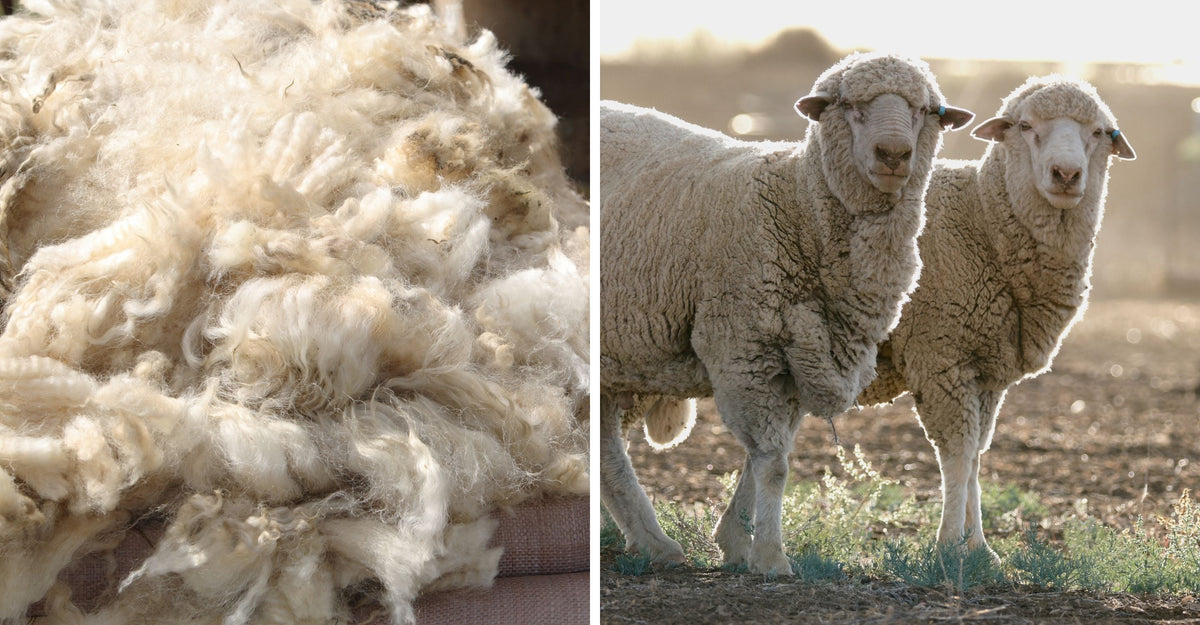
Cashmere is known for its fineness, alpaca for its long fibre and beautiful drape, and merino wool for its resilience and versatility. Cashmere fibre is typically 13–19 microns and merino wool used in clothing 15–22 microns, while the fineness of alpaca ranges from 17 to 45 microns. The biggest difference is in the crimp: merino wool has 80–150 degrees per millimetre, Huacaya alpaca about 33. That is why a merino jumper recovers its shape after wear.
All three are highly regarded wool fibres, and their properties differ in ways worth knowing before you choose a new jumper or wool garment. Which material suits you depends above all on what you want the garment for.
Three materials, three different strengths
Merino wool – comfort for every day of the year
Merino wool comes from the Merino sheep, whose wool is finer than ordinary sheep's wool. Merino wool used in clothing is usually under 22 microns, so good-quality merino wool feels soft even directly against the skin.
What sets merino wool apart is its ability to adapt to changing conditions. It absorbs moisture equal to about 14–16% of its own weight and still feels dry to the touch, which helps keep you comfortable in both cool and warmer weather. The crimped fibre works like a tiny spring: it gives the knit elasticity and helps it hold its shape.
That is why merino wool suits many kinds of clothing: lightweight T-shirts, base layers, dresses and warm knitwear.
Cashmere – fine and luxuriously soft
Cashmere comes from the fine undercoat of the cashmere goat, which is combed or shorn in spring. The fibre is typically 13–19 microns, which is why good-quality cashmere feels exceptionally soft and light.
Cashmere is a popular material especially for luxury knitwear and scarves. It offers pleasant warmth without feeling heavy and suits garments where softness matters most.
A cashmere jumper often needs slightly more careful handling and is usually washed by hand. Besides fibre fineness, quality also depends on fibre length: long-fibre cashmere stands up better to abrasion. So price alone does not tell you how good a product is.
Alpaca – soft warmth and a beautiful drape
Alpaca wool comes from the alpaca, which originates in the Andes of South America. There are two breeds, Huacaya and Suri. The material is known for its warmth, softness and beautiful drape.
Alpaca fibre is long and has high tensile strength, and it can be made into light, airy knits. Fine-quality alpaca in particular suits soft jumpers, cardigans and scarves.
Alpaca wool is not as resilient as merino wool, however, so an alpaca jumper can stretch more easily with wear, especially if the knit is loose or heavy. Fibre fineness also varies widely: 606 Huacaya samples measured in the United States averaged 27.9 microns. For a garment worn against the skin, it is therefore worth checking the stated micron count.
Merino wool vs cashmere vs alpaca: side by side

Merino wool
Versatile and comfortable

Cashmere
Luxuriously soft

Alpaca
Airy and warm
| Property | Merino wool | Cashmere | Alpaca |
|---|---|---|---|
| Softness | Very soft in fine grades | Exceptionally soft | Varies with quality |
| Fibre diameter | 15–22 µm* | 13–19 µm | 17–45 µm |
| Warmth | From thin base layers to thick knits | Light and warm | Warm and airy |
| Moisture absorption | c. 14–16% | c. 14–16% | 8–15% (estimates vary) |
| Shape retention | Recovers its shape – crimp 80–150 °/mm | Depends on yarn and knit | May stretch with wear – crimp c. 33 °/mm |
| Pilling | Depends on yarn quality | Depends on fibre length | Long fibre reduces it |
| Typical use | Base layers, everyday wear, sport and knitwear | Knitwear and scarves | Knitwear and scarves |
| Care | Often machine washable | Usually hand wash | Usually hand wash |
| Price level | €€ | €€€–€€€€ | €€–€€€ |
Properties vary with fibre quality, yarn and knit structure, and the comparison describes the typical properties of each material. * Merino wool used in clothing, usually under 22 microns according to Woolmark. The figures come from independent sources, mainly a fibre research review by Australia's RIRDC. Care instructions vary from product to product, so always check the care label.
With all three, how a garment ultimately feels in wear also depends on the quality of the yarn, the structure of the knit and the finishing of the garment. The material alone cannot tell you which garment will be the warmest or the most durable.
The merino wool in North Outdoor base layers is 17.5–19.5 microns. Our finest merino wool, at 16.0 microns, is used in the OPTIM™ fabric of our Luka and Aura merino jackets and our River merino cap.

Which wool is warmest?
There is no single warmest material. Knit thickness affects warmth more than fibre type: a knit insulates because still air is trapped between the fibres, and textile studies have found thickness to be the most important factor regardless of the fibre.
A lightweight cashmere jumper can feel surprisingly warm, and an airy alpaca knit offers pleasant warmth in cool weather. Alpaca's warmth is often put down to a hollow fibre, but that is an exaggeration: some of the fibres have air-filled cell structures, and the finest grades have the fewest.
The advantage of merino wool is that its crimped fibre keeps the knit lofty in wear too, so the layer of air is retained. It can be made into both thin base layers and thick winter jumpers. With base layers, fabric weight tells you how warm they are: 150 g/m² is thin and suits activity, while 260 g/m² is thick and suits sub-zero temperatures and standing still. Our warmest merino wool base layer is Arctic 260.

Which material is best for sensitive skin?
Softness depends most on fibre fineness. Itching is a mechanical effect: fibre ends thicker than 30 microns do not bend against the skin but press into it. The finer the fibre, the more easily it bends and the more comfortable the material usually feels. Nor is itching caused by lanolin, as a finished merino garment contains less than 0.5% of it.
Cashmere is known for its particularly fine fibres, but fine-quality merino wool and alpaca can also feel very soft. The merino wool in our base layers is 17.5–19.5 microns, and the figure is shown on the product page. If all wool irritates your skin, our Sensitive 225 base layers have bamboo viscose against the skin and merino wool on the outside.
Sensitivity always varies from person to person, so it is worth trying a garment against your own skin. More on the topic: Does merino wool itch?
Which breathes better?
Fibre type has less effect on breathability than is often claimed. Merino wool and cashmere absorb moisture equal to about 14–16% of their own weight, while estimates for alpaca range between 8 and 15%. Drying speed depends above all on the structure of the knit: its density, thickness and finish.
The practical advantage of merino wool in a base layer is that it feels dry to the touch even when damp, slows the build-up of odour and recovers its shape.
Which is most durable and easiest to care for?
Alpaca fibre has higher tensile strength than wool of the same fineness, and the long fibre reduces pilling. Merino wool, on the other hand, is more resilient, so a merino jumper recovers its shape better. The durability of a cashmere jumper depends most on fibre length.
When it comes to care, merino wool is often the least effort: airing is often enough instead of washing, and many merino garments are machine washable. Cashmere and alpaca knits are usually washed by hand. Always check the care label. You will find instructions for washing merino garments in our article How to wash merino wool.
What about blends?
A blend combines the properties of different fibres: a merino–cashmere blend, for example, combines the softness of cashmere with the resilience of merino. Care is usually determined by the most delicate fibre. It is worth checking the composition: the Woolmark label (Pure New Wool) means 100% new wool, Woolmark Blend at least 50% and Wool Blend 30–50% new wool.
Why do we choose merino wool?
For us, the greatest strength of merino wool is its versatility. We want to design clothes that feel good to wear and suit as many moments as possible – everyday life, working days, travel and the outdoors.
Merino wool fits this idea well. Its softness, breathability, moisture absorption and the elasticity of its crimped fibre make it a material you can wear in many ways all year round. Its fineness can also be measured: we state the micron count on the product page, so you can compare.

In our own knitting mill in Oulu, we make merino wool knitwear that is knitted directly to shape, so very little material is left over. In our design we focus on timeless styles and garments you will want to wear for a long time. We use only mulesing-free merino wool in our products.
Merino, cashmere or alpaca: which should you choose?
If you are looking for a particularly soft and light jumper, high-quality cashmere may be a good choice. If you like airy knits with a beautiful drape, alpaca is a material worth getting to know.
Merino wool is a good choice when you want a garment to be as versatile as possible. It works for both lightweight base layers and warm jumpers, and adapts to different seasons and situations.
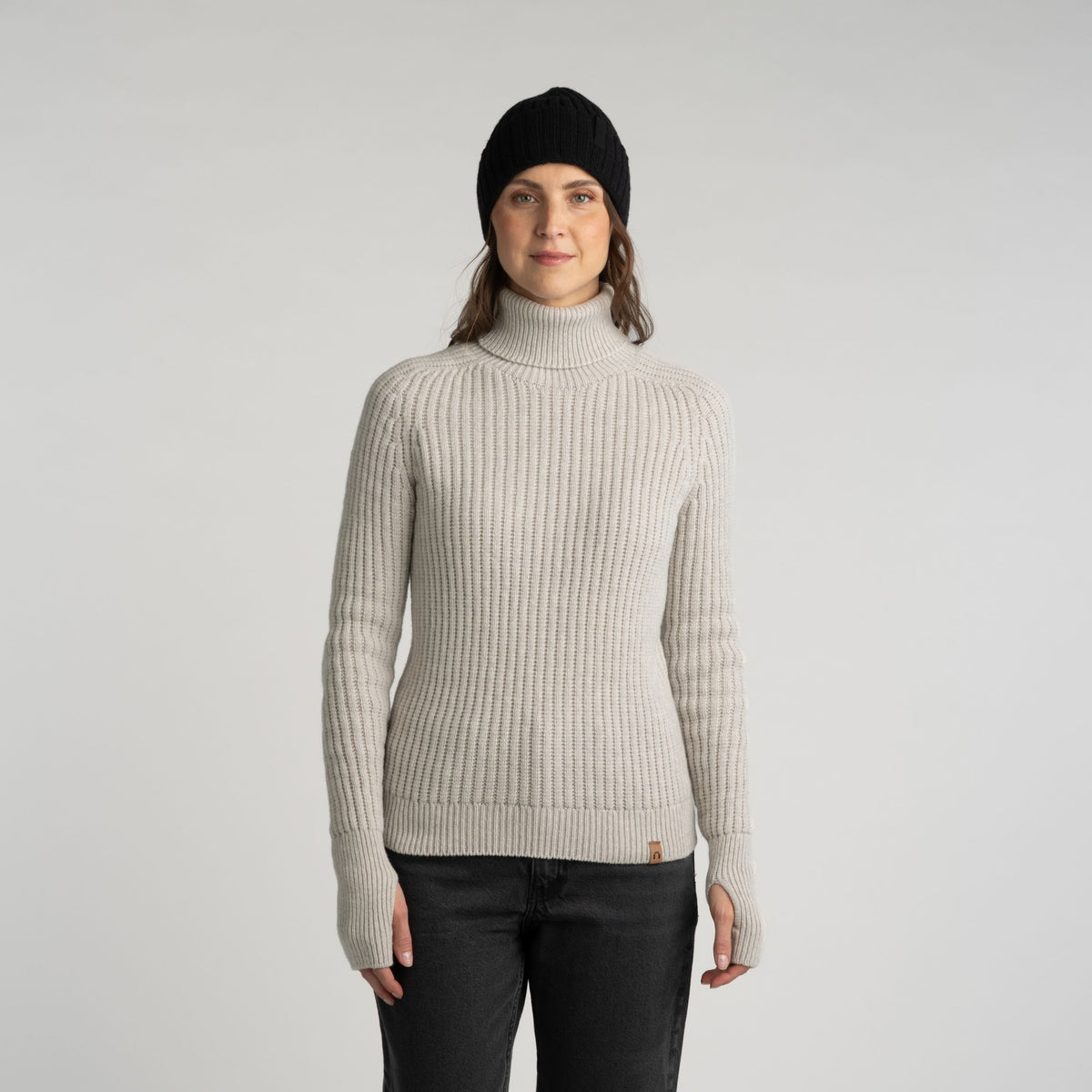
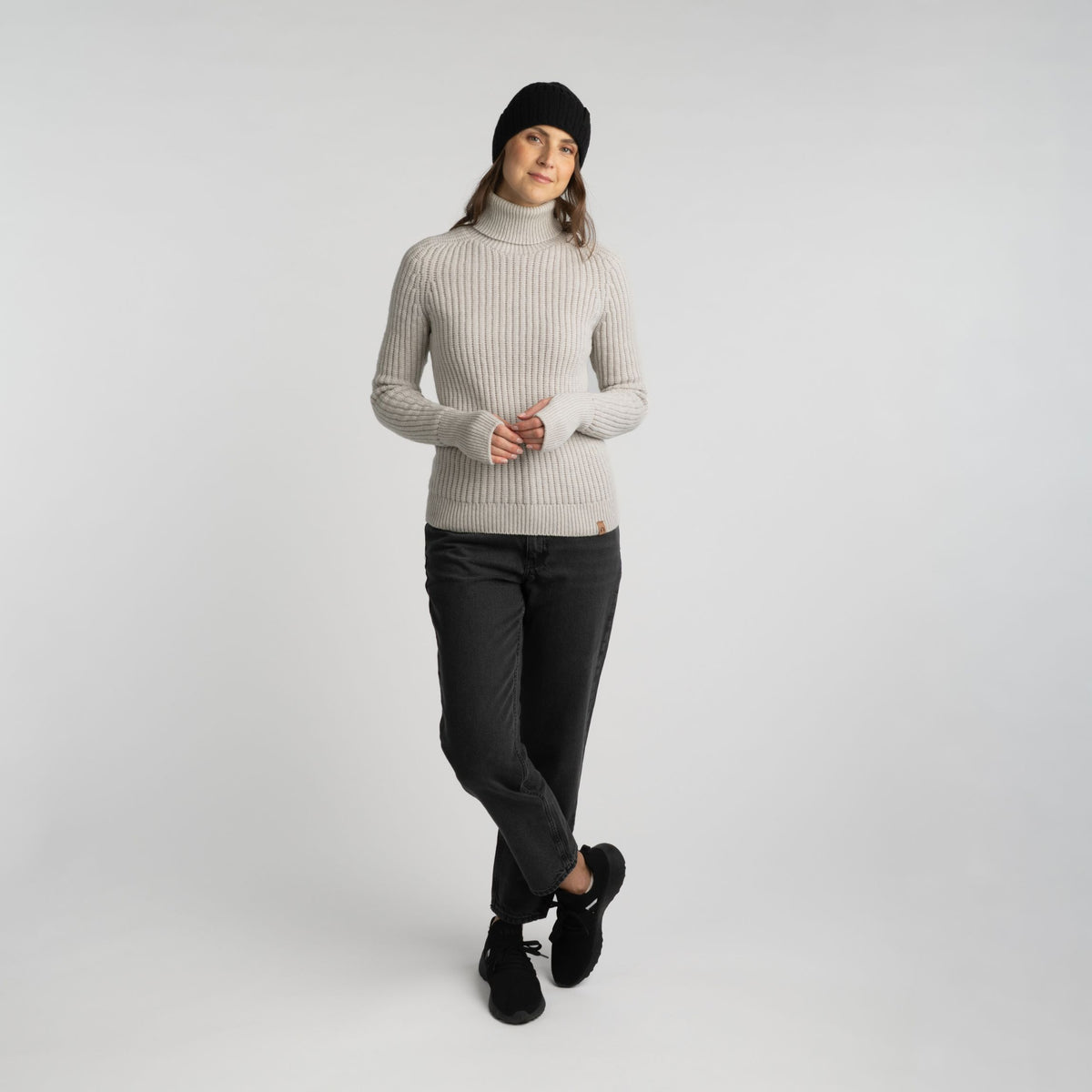
In the end, the best material is the one that suits your everyday life and that you want to wear again and again. Explore our merino jumpers made in Finland and our merino wool base layers.
Further reading: What is merino wool? · Does merino wool itch? · How to wash merino wool
Key sources
- The Woolmark Company: What is Merino wool – typical fineness of merino wool
- Wang, Wang & Liu: Properties, Processing and Performance of Rare and Natural Fibres, RIRDC 12/150 – micron ranges, fibre length, medullation
- SGS Wool Testing Services, Bulletin 5.5B – crimp values for merino
- Fiber Characteristics of Huacayas, data set of 606 samples – mean diameter, crimp and fibre length of alpaca
- WoolWise, University of New England – structure and moisture absorption of the wool fibre
- Abdel-Rehim et al. 2006, AUTEX Research Journal: Textile fabrics as thermal insulators – knit thickness and thermal insulation
North Outdoor is a Finnish company specialising in merino wool clothing. We design our products in Finland, and most of our jumpers and knitwear are knitted in our own knitting mill in Oulu. We use only mulesing-free merino wool in our products.
Updated 5 November 2026





Leave a comment
This site is protected by hCaptcha and the hCaptcha Privacy Policy and Terms of Service apply.