

Merino fleece
Merino fleece – the feel of fleece, the properties of wool
Merino fleece is fleece knitted from wool: the inside of the knit is brushed into a pile that traps air and warms, but the fibre is merino wool rather than polyester. The difference shows in moisture. Merino wool binds around 14–16 % of its own weight in moisture and keeps insulating when damp; the corresponding figure for polyester is about 0.4 %. North Outdoor's merino fleece is 95 % merino wool and 5 % elastane, the knit 250 g/m² and the fibre 17.5 microns.
Filters
19 products










What is the difference between merino fleece and ordinary fleece?
The structure is the same, the fibre is not. Both have a brushed pile surface that traps air – and air is what warms. The difference comes from what the pile is made of.
| Merino fleece | Polyester fleece | Cotton sweatshirt | |
|---|---|---|---|
| Fibre | Merino wool 17.5 µm | Polyester | Cotton |
| Moisture regain | approx. 14–16 % of weight | approx. 0.4 % | approx. 8 % |
| When damp | Keeps insulating | Dries quickly | Cools you, dries slowly |
| Odour | Slows odour build-up | Holds odour readily | Holds odour |
| Fibre shed in the wash | Wool | Synthetic microfibre | Cotton |
| Weight | 250 g/m² | varies | varies |
Is wool fleece warmer than a cotton sweatshirt?
At the same thickness yes, and the gap widens when things get damp. A cotton sweatshirt absorbs sweat and cools you down once you stop moving. Merino fleece binds the moisture inside the fibre and keeps insulating, so you stay warm during a break too. On a dry day indoors the difference is small.
Wool fleece jacket or hoodie?
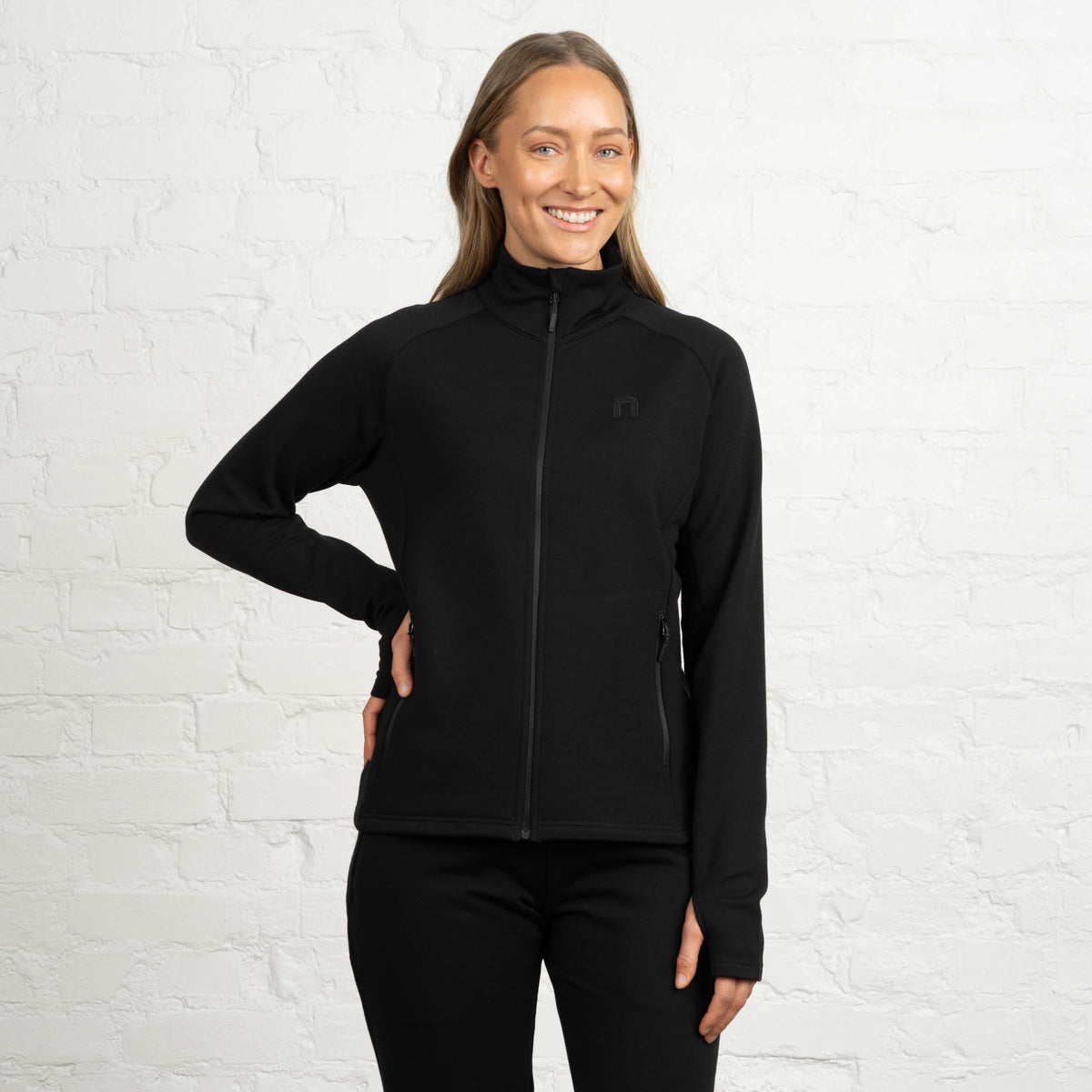
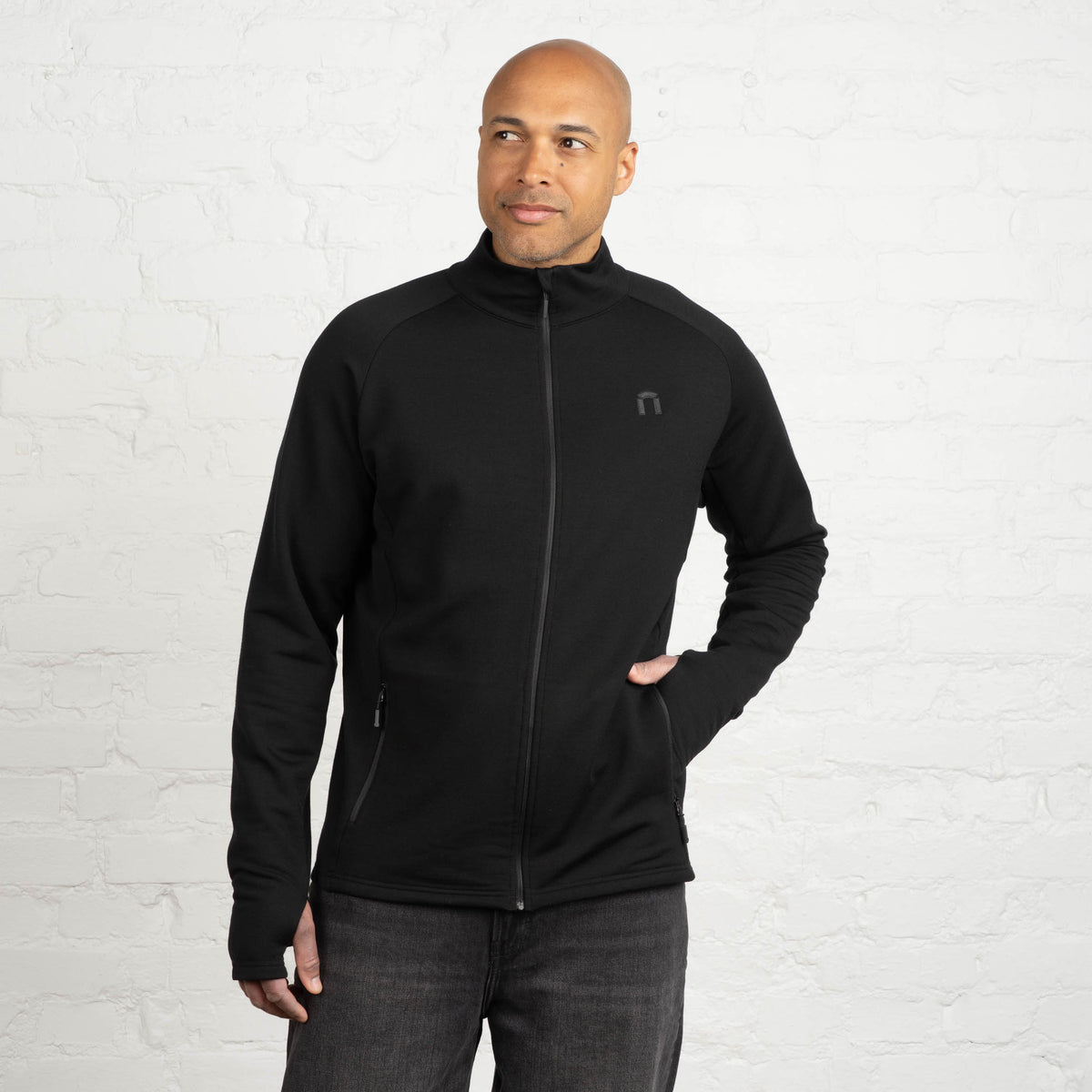
- Jacket or zip hoodie – the zip opens and closes, so you can adjust the warmth as you move. Works as a mid layer under a shell and on its own in autumn.
- Hoodie and pullover – one layer less adjustability, but a better fit under a jacket. For everyday wear and time at home.
- Trousers and cargo trousers – the same knit for the lower body. For the trail, the cabin and the sofa.
Does merino fleece itch?
Prickle comes from wool fibres over 30 microns, which do not bend against the skin but press into it. The fibre in merino fleece is 17.5 microns, and the pile surface is brushed soft on top of that, so it does not trigger a prickle response in most people. Skin sensitivity is individual, however.
Does merino fleece shed microplastics in the wash?
The pile is merino wool, so the fibre shed in the wash is a natural fibre rather than synthetic microfibre – this is the clearest difference from polyester fleece. The knit also contains 5 % elastane for stretch. Washes are rarely needed, because wool freshens by airing.
How do you wash merino fleece?
Air it after wear – that is usually enough, because merino wool evaporates the odour molecules. When a wash is needed: 30 °C on a wool or delicate programme, with a wool detergent of pH 7 or lower. An alkaline detergent roughens the surface of the fibre. No fabric softener, no tumble dryer. Always check the care label.
Read more and see the alternatives
We cover the material's background in the article wool fleece from merino wool, and the comparison in merino wool or fleece. The order of the layers is in the layering guide. See also women's jackets and men's jackets.
Responsibly produced merino wool
We use only mulesing-free merino wool in our products. All products are OEKO-TEX® STANDARD 100 certified.
